Keto OMAD: Can One Meal a Day Cover Your Protein?
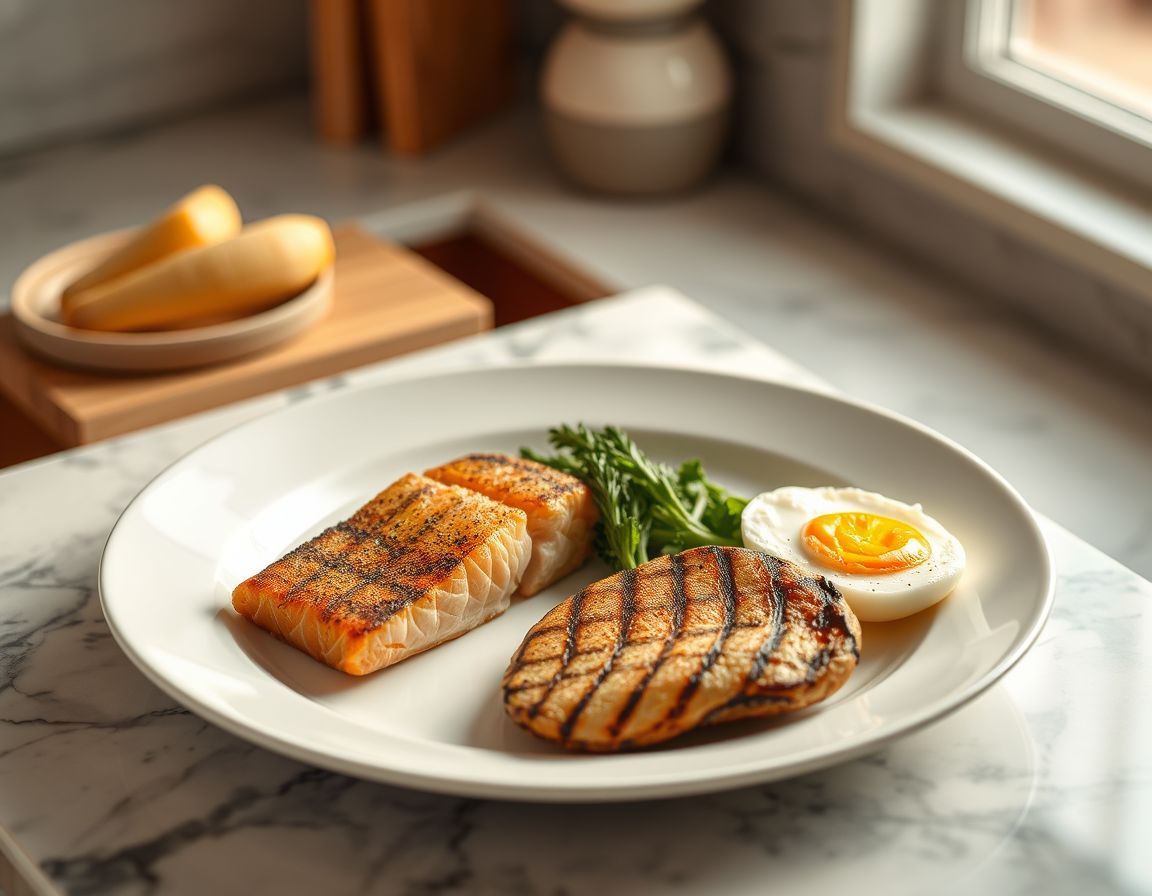
OMAD on keto feels like a cheat code. Your appetite drops, you eat once, and the day's food decisions are done. Plenty of people online rank it top tier, S-tier, the best way to do keto.
I'm not going to echo that. I'm going to run the math. The real question isn't "can I go 23 hours without food?" It's "can one plate hold a full day of protein?"
Start with your protein number
Most people on keto do well at 0.8 to 1.0 g of protein per pound of goal body weight. Goal weight, not today's weight. People training hard go up to 1.2.
Take a woman whose goal weight is 145 lb. Her range is 116 to 145 g a day. We'll use 120 g to keep the math clean.
Before you decide how many meals you need, get your own daily protein number from the free KetoDial calculator. It runs the number off your goal weight, and that number decides your meal count. A trend doesn't.
This is not for everyone. Talk to your doctor first if you have high blood pressure, kidney or heart problems, diabetes, are pregnant, or take medicine.
What 120 g looks like on one plate
Here's the plate:
- 8 oz cooked 80/20 ground beef: about 56 g protein
- 6 oz cooked chicken thigh: about 40 g
- 4 large eggs: about 24 g
Total: 120 g. That's 14 ounces of cooked meat plus four eggs, in one sitting.
Now add the fat. The satiety baseline on keto is about 1:1 fat to protein by grams. So 120 g of protein is 480 calories, and 120 g of fat is 1,080. That's 1,560 calories on one plate before a single vegetable. I'm not asking you to count calories. Most people don't for the first 8 weeks, they eat to satiety. I'm showing you the size of the job.
Here's the catch. Keto turns your appetite down. That's why OMAD feels easy, and it's also why the plate doesn't get finished. She eats the beef and two eggs, feels full, and stops. That's 68 g, just over half her target. Do that every day and "effortless" becomes under-eating protein on a schedule.
The same food on two plates
- Noon: 4 eggs plus 6 oz chicken thigh. About 64 g.
- 6 pm: 8 oz ground beef with low-carb vegetables cooked in butter. About 56 g.
Same 120 g. Each plate is a normal meal that a smaller woman can actually finish.
Now the honest part. The evidence favors spreading protein out, roughly 30 to 40 g per meal, over one giant dose. That matters more after 50. Two plates of about 60 g aren't textbook either, but they're a lot closer. Three plates of 40 g is the cleanest fit. One 120 g meal sits furthest from it, and I won't tell you it's just as good.
Will I lose muscle?
Total protein comes first. The spread comes second. OMAD puts both at risk. Most smaller women miss the total, and the ones who hit it give their muscles one feeding a day instead of two or three. Sarah covered what the body scans show in her piece on keto and muscle loss.
Watch your pace too. After the first water week, sustainable fat loss runs 0.5 to 1.5 lb a week. Over 50, 0.5 to 1 lb is a good pace. If OMAD is beating that because you're eating 68 g of protein, it isn't a win. Check yourself against the signs of undereating on keto.
I've made this mistake. Early on I copied an aggressive fasting schedule I saw online, under-ate for weeks, and was miserable to live with. My wife Dana still brings it up. These days my first meal lands around 10 or 11, and there's a second one at dinner.
Who OMAD suits, and who's better off with two
OMAD can work if:
- You're past adaptation. The roughest patch is days 3 to 10, and most people feel adapted by weeks 4 to 6.
- You can finish your full protein number in one sitting, 6 days out of 7. Finishing most of it doesn't count.
- Your number is on the small side and your appetite at dinner is big.
Two meals fit better if:
- You're over 50. The per-meal spread matters most for you.
- You're in your first 8 weeks.
- You leave protein on the plate.
- You lift hard. At 1.2 g per pound, our 145 lb example needs 174 g. That's not a one-plate job.
If you eat closer to carnivore, Carnivore Weekly has a gentler, protein-first take on intermittent fasting for women over 50.
Set your eating window from your macros
Here's the protocol. Your macros set the window, not the other way around.
- Step 1: Get your daily protein number.
- Step 2: For three dinners, note how much protein you comfortably finish. That's your per-sitting number.
- Step 3: Divide. At 120 g a day and 60 g a sitting, you're a two-meal person.
- Step 4: Place the meals 5 to 6 hours apart. Noon and 6 pm gives you an 18-hour fast with a 6-hour window.
- Step 5: Run it for two weeks. If you hit your protein 6 days out of 7, keep it. If you don't, add a meal before you cut one.
If fat loss is the goal and you want to trim, trim the added fat first. That means the butter and the oils. Never the protein. For plate ideas, see what a full day of keto macros looks like.
Quick answers
Is two meals cheating? No. Two meals in a 6-hour window is still an 18-hour fast. Nobody hands out a medal for the one-meal version.
What about coffee in the morning? Black coffee is fine. I have mine at 5:45 before I walk the dog.
What if I'm hungry at 2 pm? Eat. Hunger on a low-appetite diet is information. That's meal one, so build it around 40 g or more of protein.
What about salt? Most people on keto land around 3 to 5 g of sodium a day, about 1.5 to 2 teaspoons of salt, spread through the day. Lower insulin makes the kidneys let go of sodium and water. One meal makes the spreading hard, and two salted plates make it easier. A pinch of salt in water during the fasting hours is fine.
Stop the fasting and get checked if:
- You feel faint or dizzy when you stand up
- Your heart races or pounds and doesn't settle
- You're too weak to get through a normal day
The verdict
OMAD is top tier for convenience. For protein, for a smaller woman over 45 who's losing weight, it's mid-table at best. The math doesn't lie: 120 g on one plate is a big ask, and 60 g on two is just lunch and dinner.
Stop overthinking the fasting clock. Get your number from the calculator, find out what you can finish in a sitting, and let that set your meals.
Not a doctor: I'm Marcus, a writer on macros and protocols, not a doctor. This is education, not medical advice for your body.