Keto and Muscle Loss: What the Scans Actually Show
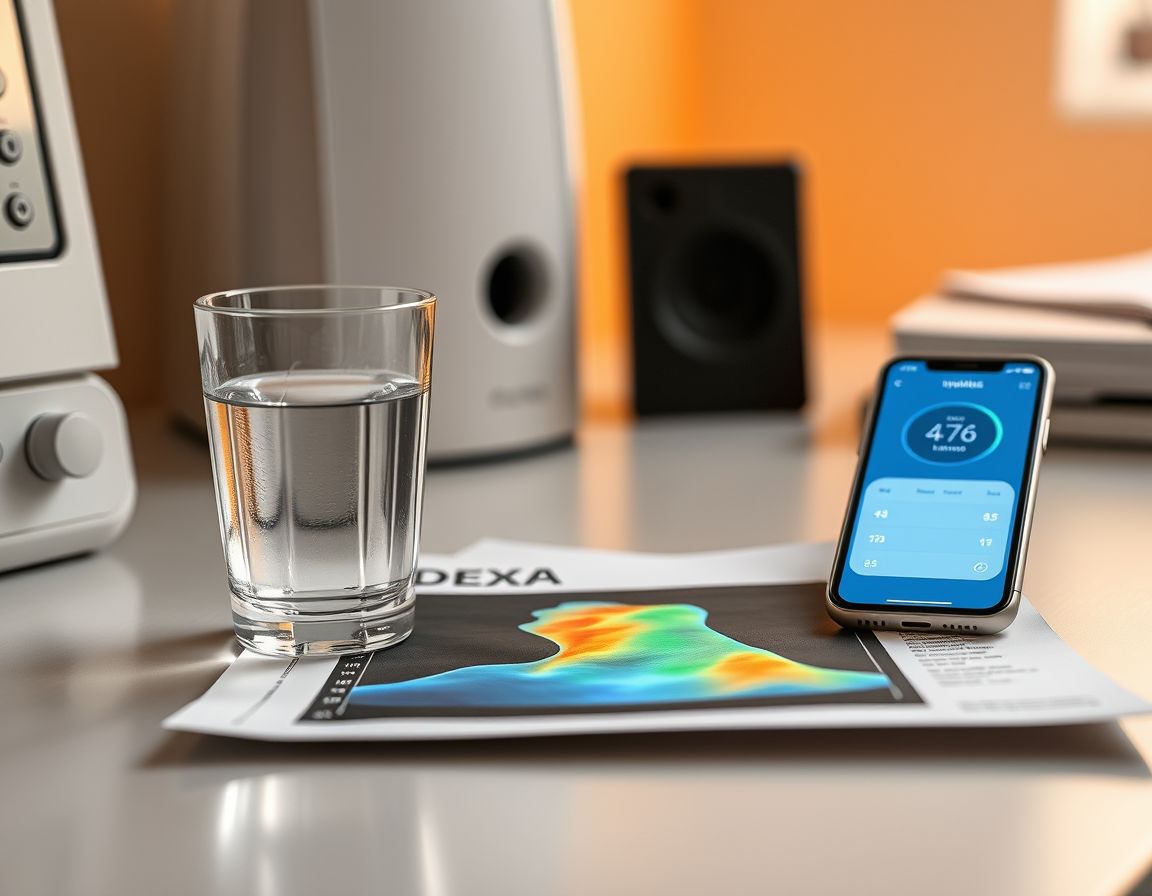
You started keto three weeks ago. You got a DEXA scan, or you stepped on one of those smart scales, and the number came back ugly. Four pounds of lean mass gone. Maybe six.
I've watched people quit over that number. And most of the time, they were quitting over water.
What those scans are actually measuring
Here's the part nobody explains before they hand you the printout. DEXA doesn't measure muscle. It measures three tissue compartments by how they absorb two X-ray energies, then it does math on the results. To turn that into "lean mass," the software assumes your fat-free tissue is about 73 percent water.
That assumption is fine when your hydration is stable. It falls apart in week two of keto, because that's exactly when your hydration isn't stable.
Bioimpedance scales are worse. They send a small current through you and estimate body water, then work backward to guess muscle and fat. Change your water, change the reading. It's that direct.
The glycogen math
A trained adult stores roughly 400 to 500 grams of glycogen between muscle and liver. Every gram of stored glycogen holds about three grams of water alongside it.
Run that out. Draining most of your glycogen means dropping somewhere near three to four pounds of combined carbohydrate and water. Almost all of it comes out of muscle tissue, because that's where most glycogen lives.
So the scan sees your quads and glutes get lighter and less dense, and it reports lean mass loss. The muscle fibers themselves, the actual contractile protein, haven't gone anywhere. The storage tank inside them emptied.
The tell is how fast it reverses. Reintroduce carbs for three days and watch two to four pounds of "muscle" come back. Real muscle doesn't rebuild that fast. Nothing does. Glycogen does.
But sometimes it's real
I don't want to talk you all the way out of concern, because genuine muscle loss on keto is a real thing and I've seen it happen. It just has specific causes, and they're usually visible from a mile away.
The first is protein sitting too low. This one traces back to an old and stubborn myth that protein kicks you out of ketosis through gluconeogenesis. Gluconeogenesis is largely demand driven, not supply driven. Your body makes glucose because it needs glucose, not because you ate a steak. People who cut protein to protect their ketone reading are protecting a number and paying for it in tissue.
The second is stopping training. If you drop calories and stop lifting at the same time, you'll lose lean mass on any diet in existence. Keto isn't doing that. The absence of a training stimulus is.
The third is an aggressive deficit with no protein floor and no strength work at all. That combination strips muscle reliably, and I've never seen it fail to.
What the training studies show
When you hold training and protein steady, the picture changes completely.
- Vargas and colleagues published an eight-week trial in the Journal of the International Society of Sports Nutrition in 2018. Resistance-trained men on a ketogenic diet lost fat mass and held lean mass compared to a control group eating carbs.
- Kephart's group ran twelve weeks of ketogenic eating in CrossFit trainees, published in Sports in 2018. Lean mass held. Fat mass dropped.
- Paoli's 2012 work with elite gymnasts found thirty days of ketogenic eating cut fat mass while muscle mass stayed flat, and performance measures didn't decline.
- Wilson's ten-week study in the Journal of Strength and Conditioning Research found lean mass gains in the keto group that were comparable to a standard diet, with an extra jump after carbs came back in.
That last detail matters. The post-study bump wasn't new muscle appearing in a week. It was glycogen and water refilling. Same effect, running in the opposite direction, in a controlled setting.
The protein floor
Morton's 2018 meta-analysis in the British Journal of Sports Medicine pooled 49 studies and found protein benefits for lean mass plateau around 1.6 grams per kilogram of body weight per day. In a calorie deficit, most researchers push higher. Helms and colleagues suggested 2.3 to 3.1 grams per kilogram of lean body mass for lean athletes cutting weight.
For most people reading this, landing somewhere between 1.6 and 2.2 grams per kilogram of your current body weight covers it. If you weigh 170 pounds, that's roughly 125 to 170 grams a day.
The KetoDial calculator will set that floor for you based on your weight, activity, and goal, which is easier than doing the conversions in your head at the grocery store. Set protein first, then fill the rest of your calories with fat. That order matters more than people think.
Creatine belongs in this conversation
Meat and fish carry creatine, so a well-built keto plate isn't creatine-free. But research on low-carb and vegetarian populations suggests muscle creatine stores respond well to supplementation when dietary intake shifts.
Five grams a day of creatine monohydrate is one of the most studied supplements in existence and one of the cheapest. It supports strength output during training, and it pulls water into muscle cells, which partly offsets the glycogen-driven drop on your scans.
That's not cheating the measurement. Intracellular water is a normal part of healthy muscle tissue.
How to actually check yourself
Stop scanning in week two. You're measuring a transition, not a trend.
Instead, do this:
- Wait six to eight weeks before your first post-keto scan, and compare scans taken under the same conditions. Same time of day, same hydration, same training week.
- Track your lifts. If your working weights are holding or climbing, you didn't lose meaningful muscle. Strength is a slow honest signal.
- Use a tape measure. Arms, thighs, waist. Muscle you actually lost doesn't come back on a tape measure in three days.
- Check the mirror in the same light. Unscientific, but weirdly reliable over months.
Everyone's baseline is different. A 55-year-old woman starting keto after ten years without resistance training has a different risk profile than a 28-year-old powerlifter, and the same scan numbers mean different things for each of them. If you have a diagnosed condition or take medications, especially anything for blood sugar, thyroid, or blood pressure, talk to your doctor before you change your diet. Those interactions are real and they need someone who knows your chart.
The short version
Most early lean mass loss on keto is glycogen and its bound water, and scans can't tell the difference. Real muscle loss happens when protein goes too low or training stops, and both are fixable this week.
Eat enough protein. Keep lifting. Take creatine. Then stop scanning yourself every fourteen days and let the data get long enough to mean something.
I'm not a doctor. I've researched this deeply and worked with a lot of people through this exact panic, but I'm not your doctor. If you have health conditions, take medications, or need guidance specific to you, talk to someone who knows your full medical picture. Everything here is educational, based on published research and what I've seen work. Your situation might be different.