Ravenous at Week 3? It's Not Your Electrolytes
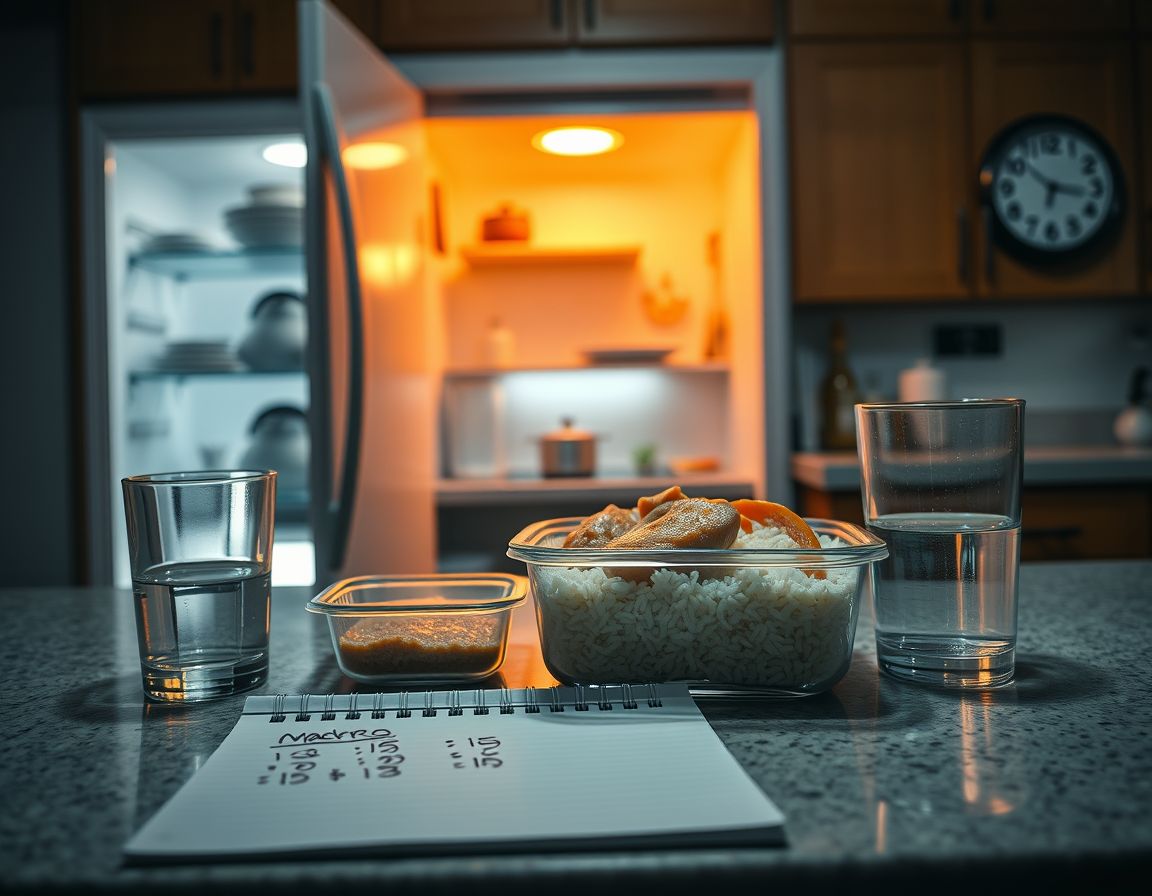
Week one you weren't hungry at all. Week two you felt a little off but fine. Now it's week three and you'd eat the drywall.
Here's what happens next. Someone tells you it's electrolytes. Add salt, they say. And you do, and you're still ravenous at 9 p.m. staring into the fridge.
I've coached enough people through this exact window to know the pattern. Hunger that shows up at weeks 3 to 5 is almost never a salt problem. It's usually one of four things, and all four are fixable this week without buying anything.
This window is also where a lot of people quit. Carnivore Weekly covered why week three is where most people bail, and the timing lines up. Nothing is going wrong. You just hit the part nobody put on the schedule.
Why the electrolyte advice gets over-applied
Because it's the right answer to a different question.
Headaches, fatigue, dizziness and calf cramps in days 3 to 10? That's sodium loss, and salt fixes it fast. That advice earned its reputation honestly, so it gets repeated for every keto complaint that follows.
But appetite at week 3 has different mechanics. By then your kidneys have mostly stopped dumping water and sodium at week-one rates. If your energy is decent and you're just hungry, salt isn't step one. Food composition is.
The sequence, in order. Don't skip ahead.
Step 1: Did you cut carbs and fat at the same time?
This is the answer maybe six times out of ten. You dropped the carbs on purpose. You also dropped fat without noticing, because "healthy" habits are built in.
Chicken breast instead of thighs. Full-fat yogurt swapped for low-fat Greek. A protein shake standing in for eggs cooked in butter. Dressing measured with fear. Each swap is small. Stacked together they gut your satiety.
Some people find the night hunger disappears within two days of adding a real fat source back to dinner. Half an avocado. A tablespoon of olive oil on the vegetables. Butter on the steak instead of next to it.
Protein is the anchor. Fat is the lever. A reasonable satiety baseline is roughly 1:1 fat to protein by grams. If you're eating 120 g of protein and 60 g of fat, you've built a plan that will make you miserable by evening.
Now the part almost nobody says out loud: that same lever moves in both directions. When hunger is the problem, you dial added fat UP. When a genuine stall is the problem, you trim added fat DOWN, and you trim the added stuff first, butter, oil, cream, never the protein. Same lever, opposite directions, depending on the complaint. If you've been reading stall advice while your actual problem is hunger, you've been turning the dial the wrong way.
Step 2: Check your protein floor
Aim for 0.8 to 1.0 g of protein per pound of your goal body weight. Up to 1.2 if you're training hard. The denominator is always goal weight, not current weight.
So a goal of 145 lb means 116 to 145 g of protein a day. Most women I work with who are starving at week 3 are landing near 75.
Distribution matters as much as the total. 30 to 40 g per meal beats one giant chicken breast at dinner, and that gap widens after 50. A breakfast with 8 g of protein sets up an afternoon you'll lose. I broke down what this looks like on a plate in what a full day of keto macros actually looks like.
Step 3: Is your deficit too aggressive, or invisible?
My standing position: don't count calories for the first 8 weeks. Eat to satiety, hit your protein, keep net carbs at 20 to 30 g.
The catch is that keto suppresses appetite so well in weeks one and two that plenty of people accidentally eat 1,100 calories a day and feel great. Then adaptation progresses, the appetite suppression softens, and the deficit you didn't know you were running comes due all at once. That's the week 3 wall.
Sustainable loss after the water week is 0.5 to 1.5 lb per week, and 0.5 to 1 if you're over 50. If you dropped 9 lb in week one and 4 in week two, you weren't being disciplined. You were running a deficit your body is now billing you for.
You don't need to count forever. You need one honest look. Log three days as they actually happened, no editing.
Step 4: Are you using a stale target?
If you set your macros the day you started and you've lost 12 lb since, your numbers describe a woman who no longer exists.
Protein targets shift with goal weight, and fat targets shift with everything. I've written about why you should recalculate your keto macros every 10 pounds, and week 3 hunger is a good prompt to do it early. Run your current numbers through the KetoDial calculator and compare them to what you've been eating. Two minutes.
Same principle applies to a real stall. Don't count early, audit when stalled. Those aren't contradictory rules, they're the same rule at two different stages. Genuinely stuck for 3 to 4 weeks with no movement on the scale or the tape measure? Run a 7-day food audit, then recalculate at your current weight.
When it might actually be minerals
Fair is fair. Sometimes it really is, and here's how I'd think about it.
Minerals are worth a look when the hunger arrives alongside cramps, a dull afternoon headache, or a real craving for something salty. That pickle craving is worth reading rather than ignoring. Your body is often pretty good at naming what it wants.
Two things I'd separate out of that group rather than lump in. Lightheadedness on standing is not a salt signal, it's one of the commoner reasons a blood pressure medication needs adjusting after a diet change, so mention it to your doctor rather than salting past it. And a heartbeat that races or feels like it's skipping is not a minerals question at all: too much and too little potassium both cause it and they feel the same, so ring your doctor and say you've recently changed how you eat.
The practical version, and you'll notice there are no daily targets in it. Season your food until it tastes right to you and expect your taste for salt to climb early on. Get potassium off the plate, avocado and salmon and leafy greens, because that's the mineral where a supplement or a salt substitute is the thing that goes wrong rather than the thing that helps. Magnesium in the evening is often worth trying, and how much is a question for your pharmacist, who can see everything else you take. The longer version is in the keto electrolytes breakdown. And if the dominant symptom is flat exhaustion rather than hunger, still being exhausted after adaptation is a separate problem with a separate fix.
Before you change any of it: if you take a daily pill for your blood pressure or your heart, a water pill, or anything to do with your kidneys, ask your doctor or your pharmacist before you increase sodium or potassium, and that includes salt substitutes and electrolyte packets. Some of those medicines already hold potassium in your body, so extra on top is the problem rather than the help.
The one nobody warns you about: your cycle
Keto plus the week before your period can be genuinely brutal. Some women describe wanting to eat everything in sight, and they're not exaggerating.
This is predictable, which makes it plannable. Expect the luteal phase to raise your appetite. Add 20 to 30 g of fat and an extra protein-forward meal on those days on purpose, rather than white-knuckling it and losing the whole week to a Tuesday.
If you're perimenopausal and 20 to 30 g of carbs has your sleep and mood falling apart month after month, a higher range of 50 to 90 g exists. Treat it as a deliberate exception you choose with a reason, not a default you drift into.
What about water?
Drink it. It helps, it takes up space, and mild dehydration does read as hunger. But water is a supporting move. It won't rescue a plan that's 60 g short on protein.
Run it this week
Three days of honest logging. Check protein against goal weight. Check fat against protein, roughly 1:1. Recalculate if you've lost 10 lb. Then, and only then, look at sodium.
Also worth saying: hunger is a normal human experience. Sometimes you're just hungry, and no protocol erases that. But hunger that arrives suddenly at week 3 and won't leave is usually information, not weakness. Read it, adjust, keep going. Full adaptation runs 8 to 12 weeks, and a fair trial is 60 to 90 days.
I'm not a doctor. I've coached people through this and run it myself, so I know what works in practice. But I'm not your doctor. If you take medication, especially anything for blood sugar, blood pressure, your heart or your kidneys, or a water pill, your prescriber needs to be part of this, and that includes sodium and potassium as well as the medication itself. Medication changes are their call, not mine and not yours. Your mileage may vary.