Slow Keto Weight Loss? Read the 4-Week Average
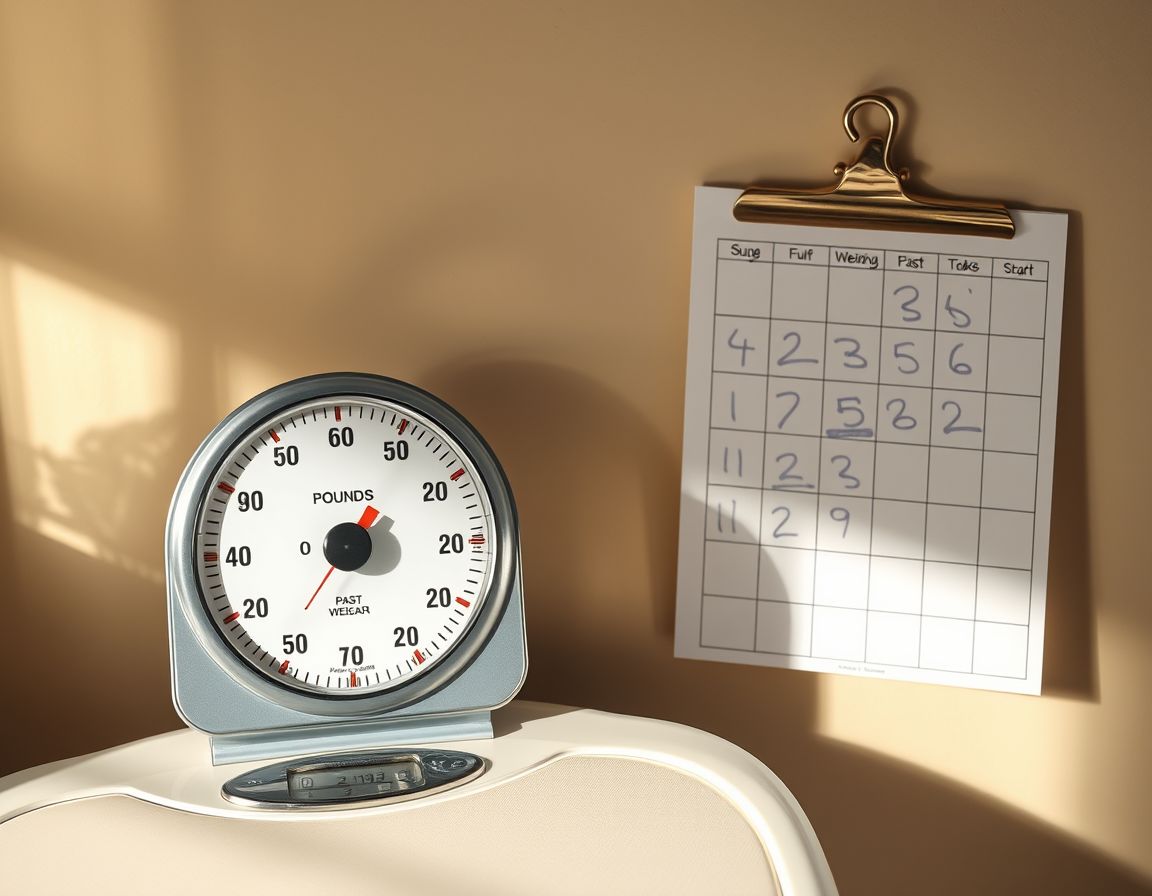
Down 7 pounds in the first two weeks. Then 1 pound the next week. Then the scale went up. That's the exact moment a lot of people decide keto stopped working, cut another 300 calories, and burn out by Christmas.
Stop. Before you change anything, check whether you're stalled or just slow. Those are two different problems, and only one of them needs fixing.
The first month lies to you
Week one on keto is mostly water. Your body drops stored carbs and the water that comes with them, typically 3 to 7 pounds, less for smaller or older bodies. That number feels like the new normal. It isn't.
After the water week, fat loss runs at a much quieter pace. Most people on keto lose about 0.5 to 1.5 pounds a week. Over 50, 0.5 to 1 pound a week is a good pace. Compared with week one, that looks like nothing. It's not nothing. It's the real thing.
Before you judge your pace, make sure the plan underneath it is sized right. Run today's weight and goal through the free KetoDial calculator to check your calorie and protein numbers before you decide you're stuck. Most people on keto aim for 0.8 to 1.0 grams of protein per pound of goal weight and 20 to 30 grams of net carbs a day.
This is not for everyone. Talk to your doctor first if you have high blood pressure, kidney or heart problems, diabetes, are pregnant, or take medicine.
Turn your pace into a percentage
Pounds mean different things on different bodies. A percentage puts everyone on the same ruler. Here's the math:
Weekly loss ÷ body weight × 100 = weekly percentage.
For a reader over 50, a healthy pace lands around 0.25 to 0.5% of body weight a week. Check it against real people:
- 160 lb: 0.25% is 0.4 lb a week, 0.5% is 0.8 lb a week.
- 180 lb: 0.25% is 0.45 lb a week, 0.5% is 0.9 lb a week.
- 200 lb: 0.25% is 0.5 lb a week, 0.5% is 1.0 lb a week.
Over four weeks, that's roughly 1 to 2% of body weight a month. At 180 pounds, that's about 2 to 3.5 pounds. If you're there, you're not stalled. You're on schedule.
Why one morning's weigh-in means almost nothing
Your body weight swings a pound or more from day to day for reasons that have nothing to do with fat. A salty dinner. A late meal. A hard walk that leaves your legs holding water. Constipation. For women still cycling, the week before a period can easily add a few pounds of water that leave on their own.
A loss of 0.5 pounds a week is smaller than those swings. So any single weigh-in can hide a real loss or invent a fake gain. If you had one off-plan night, the jump the next morning is mostly water too. I covered that in what happens after one night off keto.
For years I ran operations at a building supply yard. You never judged stock on the morning a truck came in. You looked at the weekly count. Your scale works the same way.
Here's the protocol: the weekly average
- Weigh every morning. After the bathroom, before coffee, same scale, same spot on the floor.
- Write it down and don't react. A daily number is a data point, not a verdict.
- Average each week. Add the seven numbers and divide by seven.
- Compare averages, not days. Look at this week's average against the one from four weeks ago.
Here's a real-looking week at 177 pounds: 177.2, 176.4, 177.8 (salty dinner), 176.6, 176.0, 176.8, 176.5. Add them up and you get 1,237.3. Divide by 7 and the average is 176.8. Wednesday's "gain" disappears into the math.
Now stack five weekly averages: 178.6, 178.2, 178.4, 177.3, 176.6. Week three looks like a gain. Plenty of people quit right there. But first to last is 2.0 pounds in 4 weeks, which is 0.5 pounds a week, or about 0.28% of body weight. Slow, steady, and right inside the target range.
If daily weigh-ins mess with your head, weigh three mornings a week and average those. Fewer numbers, same idea.
Add the tape measure
The scale counts everything: water, food in transit, muscle. The tape tells you where fat is leaving. Over 50, when you're working to hold on to muscle, the waist often moves while the scale sits still.
- Once a week, same morning as a weigh-in.
- At the belly button, tape level all the way around, snug but not squeezing.
- Breathe out normally and read it. Don't suck in.
- Measure twice and write down the average.
In the example above, the waist went from 38 inches to 37.5 over the same four weeks. Half an inch with a scale that "wasn't moving" is progress.
Stalled or slow? The 4-week test
Run this check once a month, not once a day:
- Slow, keep going: the 4-week average is down at all, or the waist is down. Change nothing.
- Real stall: 3 to 4 weeks with no change in the weekly average and no change on the tape.
Only a real stall earns a change, and even then, cutting calories isn't step one. Look at sleep, stress and electrolytes first. Then run a 7-day food audit, including the butter, cream and cheese. If you track on your phone, check how your app handles fat in AI food trackers and fat grams. Then recalculate your numbers at your current weight, which I walk through in recalculating macros every 10 pounds.
Sarah laid out the full stall order, and why the plan needs resizing after 50, in why keto stalls after 50. Read that before you touch your food.
The math doesn't lie, if you give it time
Early on, most people don't count calories for the first 8 weeks. They eat to satisfaction and let the weekly average do the reporting. Auditing only comes in when the numbers say you're truly stuck. Same position, different stage.
Judge the trend over a month. Judge the plan over 60 to 90 days. If the numbers still look off, plug your current weight into the KetoDial calculator and start from fresh numbers, not a guess.
Not a doctor: I'm not a doctor, and I have no nutrition credentials. I spent my working life reading inventory numbers, and I read body numbers the same way: over weeks, not mornings. This is education, not personal advice. Your situation may be different.