Keto vs Mediterranean: Same Weight Lost, Different Liver
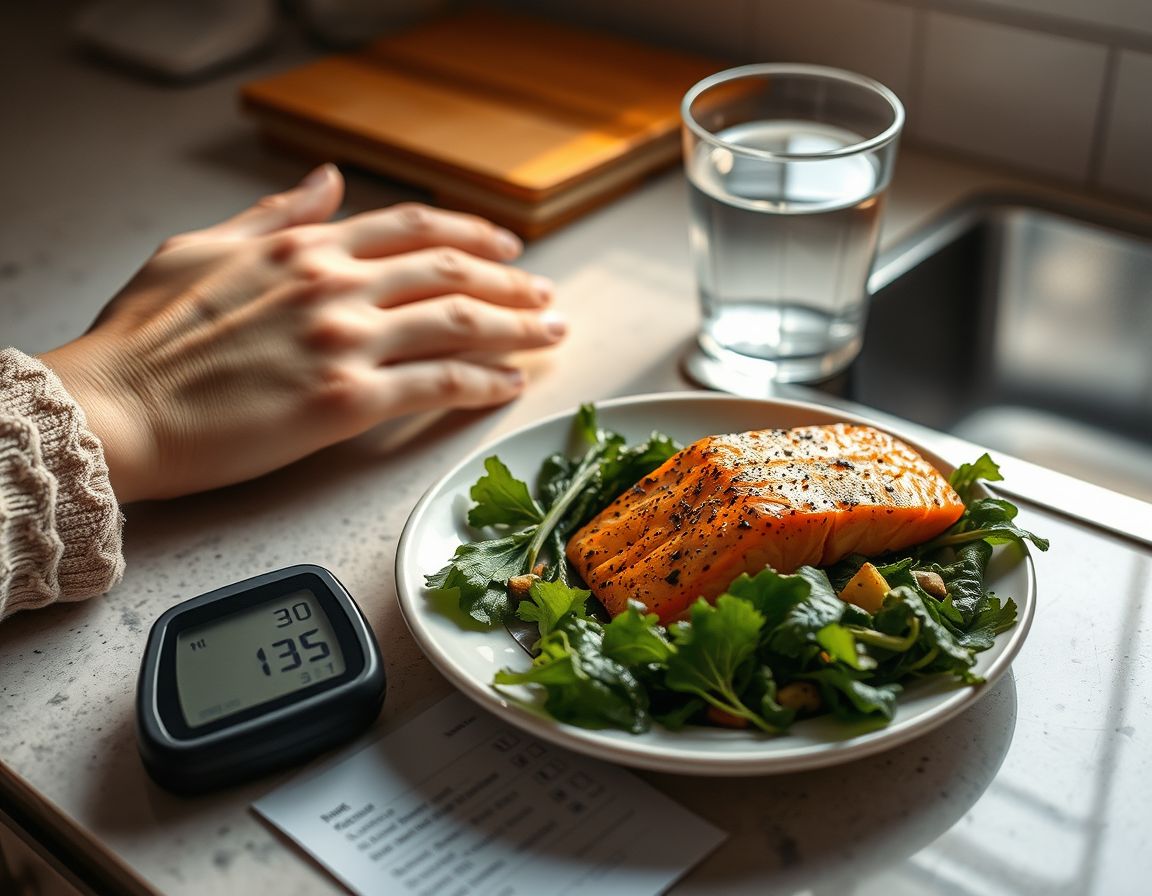
Same weight lost, different liver
Imagine three women who each lose the same amount of weight over five months. On the scale they look identical. Inside, they aren't. One of them has lost far more fat from her liver than the other two, and her blood sugar has moved back out of the prediabetes range.
That, in plain words, is what a feeding trial from Washington University School of Medicine found. Petersen and colleagues published it in Cell Metabolism on August 27, 2026, and people are arguing about it again this week. I read it at my kitchen table with a highlighter and too much coffee. Here's what it says, what it doesn't say, and what it might mean if you're a woman over 40 trying to lose weight.
What the researchers did
The researchers took a few dozen adults who had three things in common: obesity, prediabetes and fatty liver. They assigned each person to one of three diets for about five months:
- Ketogenic: very low carb, about 4% of calories, and high fat, about 73% of calories.
- Mediterranean: the olive oil, fish, vegetables and whole grains pattern most doctors already recommend.
- Plant-forward low-fat: mostly plants, with fat kept low.
The important detail is that all the food was provided. Nobody was guessing at portions or grabbing a muffin in the hospital cafeteria. When food is controlled like that, you can be much more confident that differences between groups come from the diets, not from who stuck with the plan.
What they found
All three groups lost about the same amount of weight. That alone is worth knowing, because it means the liver results below aren't just "keto people lost more weight."
- Liver fat fell about 67% on keto and about 45% on the other two diets.
- Prediabetes: 50% of the keto group no longer met prediabetes criteria by the end, compared with 29% on Mediterranean and 7% on low-fat.
- Glucagon, a hormone linked to clearing fat from the liver, rose the most on keto.
The glucagon finding is the "why" I find most interesting. Insulin tells your body to store. Glucagon pushes the other way and helps the liver break down and burn its own fat. When carbs are very low, insulin stays lower and glucagon has more room to work. That's a plausible way the same weight loss could leave the keto group with a leaner liver. It's a clue, not a closed case.
If you read our July post on keto and fatty liver reversal, this is a different study. That one gave us early signals. This one adds a controlled feeding design and a head-to-head comparison with two popular diets, which is why it's getting so much attention.
Please don't use this to trash the Mediterranean diet
I've seen a lot of "keto wins, Mediterranean loses" posts this week. That isn't what the data shows. A 45% drop in liver fat is a big result. Nearly a third of the Mediterranean group moved out of prediabetes. If that's the way of eating you can actually live with, it did real good in this trial.
The truth is that the best diet is the one you'll still be eating next spring. Keto looked stronger on liver fat and blood sugar here. Mediterranean was still good. The low-fat plant-forward group, at 7% for prediabetes, is the one that should give people pause.
The honest caveats
- It's small. A few dozen adults split three ways means each group was modest in size. One or two people can move the percentages.
- Every meal was provided. Real life means a Costco run, a birthday dinner and a Tuesday where you're too tired to cook. Results usually get smaller once people feed themselves.
- It was only months long. About five months tells us about early changes. It doesn't tell us what happens at two years or ten.
- No long-term outcomes. Liver fat and prediabetes criteria are markers. The trial can't say whether anyone avoided diabetes or liver disease later in life.
One more thing: 73% of calories from fat is how the trial was built. It isn't a target I'd give you.
What this means for a woman over 40
Many women in their 40s, 50s and 60s notice the weight settling around the middle. Insulin resistance often comes along with it, and so does fat in the liver, usually without any symptoms. If your doctor has mentioned "a bit of fat on the liver" or an A1c in the prediabetes range, this trial is relevant to you. The keto and insulin resistance post covers that connection in more depth.
Here's what people on keto typically do day to day:
This is not for everyone. Talk to your doctor first if you have high blood pressure, kidney or heart problems, diabetes, are pregnant, or take medicine.
- Carbs: most people aim for 20-30 g net carbs a day. Low-carb vegetables fit easily inside that.
- Protein first: a common target is 0.8-1.0 g per pound of goal body weight. Protein is the anchor. Fat is the lever you turn up or down for fullness and fat loss.
- Realistic pace: after the first water-weight week, fat loss usually runs 0.5-1.5 lb a week, and closer to 0.5-1 lb a week for many women over 50.
- A fair trial: judge it at 60-90 days, not 10.
The KetoDial calculator at ketodial.com will turn those ranges into numbers for your height, weight and goal in a couple of minutes.
What to track
The scale can't see your liver, which is the whole point of this trial. If your regular bloodwork already includes A1c, fasting glucose and liver enzymes, those are the numbers to compare at the 60-90 day mark. A tape measure around your waist tells you more than the scale does. If you want to know whether you're actually in ketosis, start with measuring ketosis the right way.
Any change to your medicine is your prescriber's decision. Cholesterol is worth watching too, and ApoB is a useful marker to ask about, because the long-term LDL question on keto is honestly still open.
Your situation might be different from anyone in this study. But if you've been told your liver and your blood sugar are heading the wrong way, this trial suggests that cutting carbs this far is worth a serious, measured try.
Not a doctor: I'm Sarah, a writer and guide, not a doctor. I spend a lot of time reading the research and explaining it as clearly as I can. Everything here is education, not advice for your body.