Did the USDA Just Endorse Keto? Not Quite.
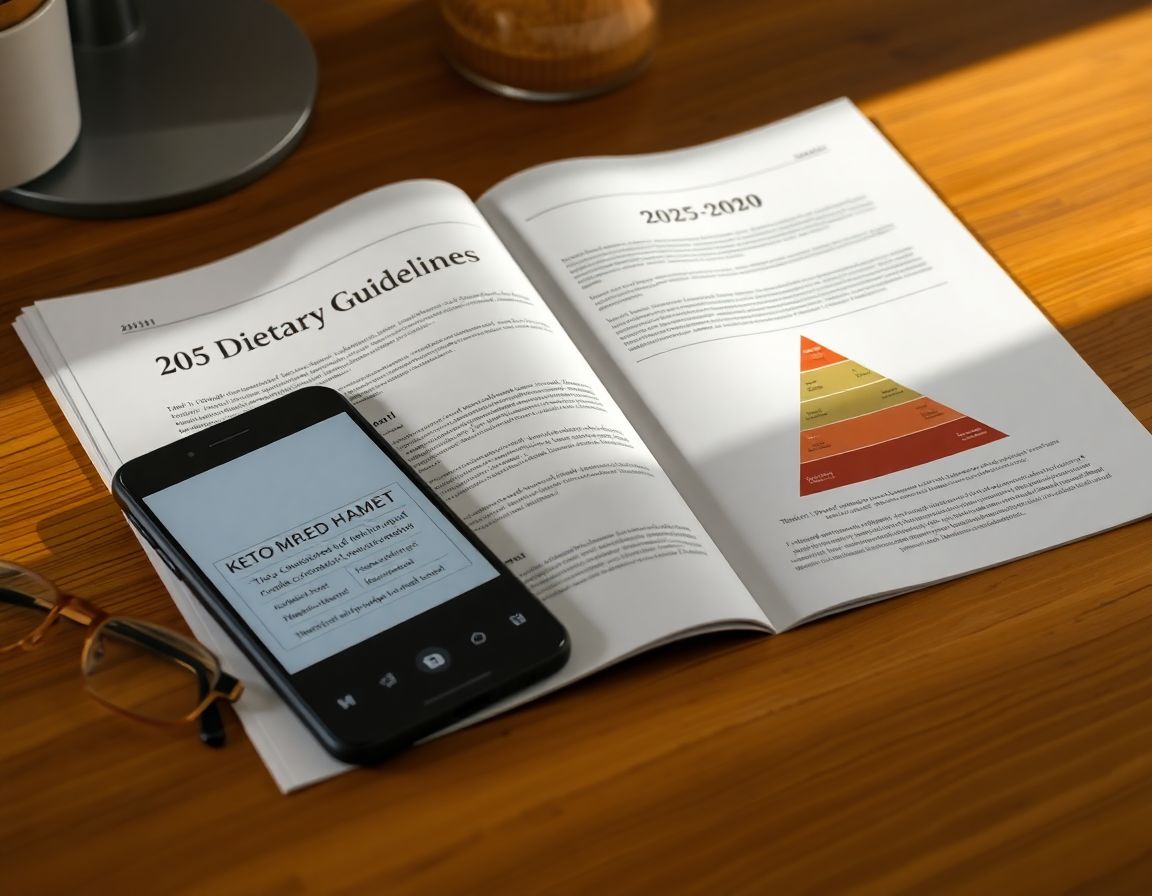
Did keto really make it into the food pyramid?
Short answer: not exactly. And I want to walk you through what actually happened, because the headlines have gotten way ahead of the facts.
Here's what's true. In January 2026, the USDA and HHS released the 2025-2030 Dietary Guidelines for Americans. It's the 10th edition, and it came with a brand new graphic the agencies are calling the New Pyramid. So yes, a pyramid is back on the cover after years of the MyPlate icon.
But nowhere in that document does the word "ketogenic" appear as an endorsed diet. Keto wasn't "added" to anything. What changed is bigger and messier than a single diet getting a gold star, and it's worth understanding before you repost that screenshot.
What the 2026 guidelines actually changed
For 45 years, every edition of these guidelines pushed the same core message: eat less fat and fewer animal foods, eat more carbs and grains. That was the through line from 1980 all the way to 2025.
The 2025-2030 edition breaks from that. It puts a priority on protein and openly encourages meat and full-fat dairy. CNN's coverage on January 7 summed it up as "less sugar, more protein," even noting a nod to beef tallow. HHS, under Robert F. Kennedy Jr., called the whole thing a "historic reset."
So the direction of travel is genuinely friendlier to how we eat on keto. More protein. Fewer added sugars. Less emphasis on piling your plate with grains. If you've felt like the government was working against your low-carb plate for years, this is the first edition that softens that stance.
That's the real story. Not "keto is now official," but "the anti-meat, anti-fat framing that dominated for decades finally cracked."
What people are getting wrong
A few claims are floating around that the actual document doesn't back up. Let me sort them out.
- "Keto is on equal footing with grains now." The guidelines don't say this. They shifted emphasis toward protein, but they didn't rank eating patterns or crown low-carb as the recommended approach.
- "They dropped the saturated fat warning." They didn't. The guidelines still recommend keeping saturated fat under 10% of your daily calories, the same cap that's been there for years.
- "Keto is in the pyramid." The New Pyramid is a food-group graphic, not a diet endorsement. Keto isn't named on it.
That saturated fat point is where things get genuinely confusing, and I don't want to gloss over it. The guidelines encourage red meat and full-fat dairy while also telling you to cap the saturated fat those foods are full of. Researchers noticed the contradiction fast. Stanford's Nutrition Studies Research Group praised parts of the update but criticized what they saw as an overemphasis on protein and inconsistent saturated fat advice. Qi Sun and Frank Hu published a 2026 paper in the Journal of Nutrition digging into exactly this tension over fatty acids and heart disease.
So the science isn't settled, and the document itself sends mixed signals. Anyone telling you the government just fully validated bacon and butter is spinning it.
Why this still matters for you
Even with the contradictions, this is a real shift, and it changes a few practical things.
First, cultural cover. When your doctor, your mom, or your coworker pushes back on your low-carb plate, the official baseline no longer treats meat as the enemy. That doesn't make you right by decree, but it does mean you're not fighting the entire federal food policy anymore.
Second, food programs shift with these guidelines. School lunches, nutrition assistance, and clinical advice all lean on this document. A protein-forward baseline slowly ripples outward into what shows up on real plates.
Third, and this is the one I care about most, it's a reminder that guidelines are a starting point, not a prescription for your body. The 10% saturated fat cap is a population-level average. Your metabolism, your bloodwork, and your goals are specific to you.
What I'd actually do with this news
In my experience helping people move to lower-carb eating, the folks who do best don't chase headlines. They watch their own numbers.
Here's what that looks like in practice:
- Get baseline bloodwork before and a few months into any big dietary change. Fasting insulin, a full lipid panel, and HbA1c tell you far more than any pyramid graphic.
- Prioritize protein, which is one area the new guidelines and the keto world actually agree on. It keeps you full and protects muscle.
- Dial in your macros to your real body, not a national average. This is exactly what the KetoDial calculator is built for. Plug in your stats and goals, and it gives you protein, fat, and carb targets that fit you instead of a one-size-fits-all cap.
- Don't ignore the saturated fat conversation. Some people see LDL climb sharply on high-fat keto. Others don't budge. The only way to know your pattern is to test, not to assume.
The guidelines gave low-carb eaters a little breathing room this year, and that's worth acknowledging. Just don't let a New Pyramid on a government cover replace your own data. Your situation might be different from the person standing next to you, and that's exactly why individual testing wins.
The honest bottom line
Keto didn't get inducted into the food pyramid. What happened is subtler and, honestly, more interesting: the longest-running message in American nutrition policy shifted toward protein and away from treating meat as something to fear, while still hedging on saturated fat.
That's progress, not a coronation. Treat it as one more reason to eat well and test often, not as permission to stop paying attention.
Not a doctor. I've researched this deeply and worked with a lot of people on low-carb eating, but I'm not your doctor. If you have health conditions, take medications, or need specific guidance, talk to someone who knows your full medical picture. Medication use and diagnosed conditions require professional medical management, so don't change your treatment plan based on general information. Everything here is educational, based on the actual guidelines and published research. Your situation might be different.