Keto and Your Cycle: Why Luteal Week Wrecks Your Numbers
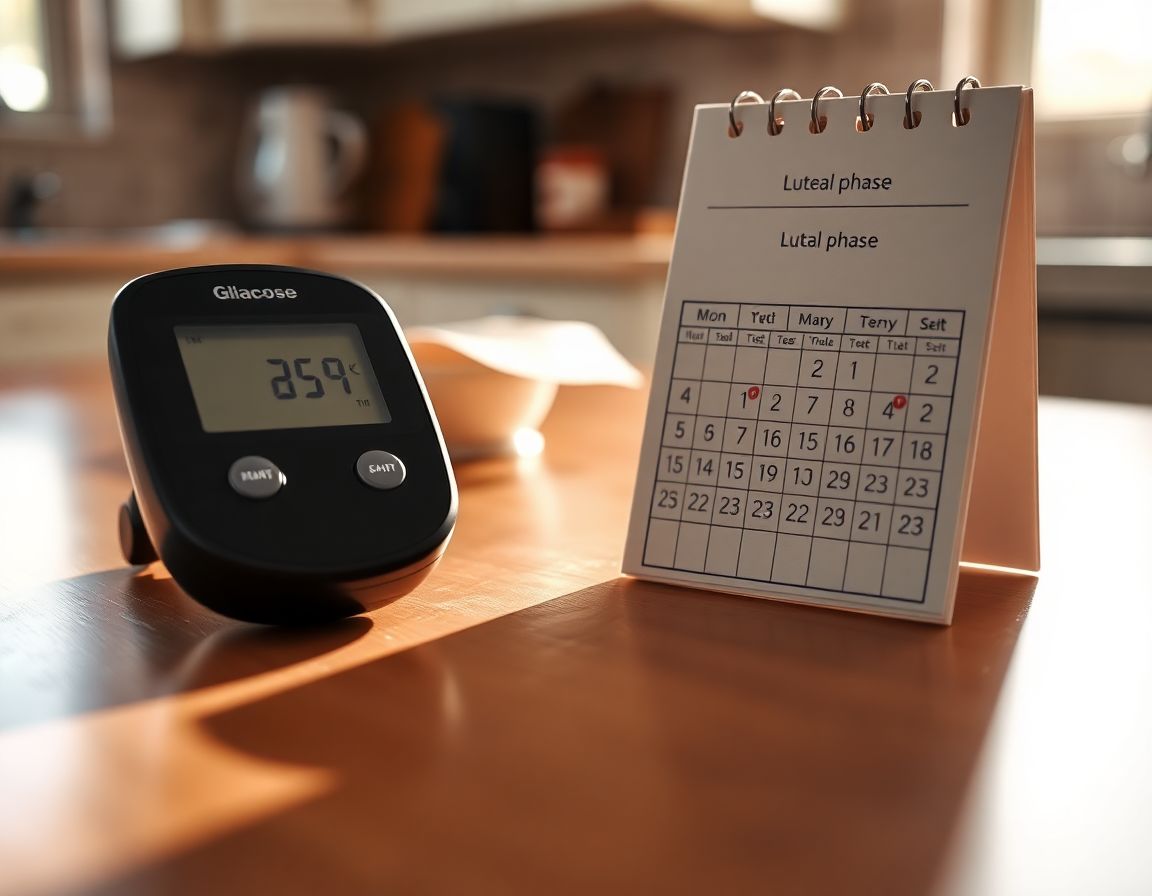
Your fasting glucose jumped ten points overnight. Your ketones dropped for no reason. You'd fight someone for a brownie, and the scale is up three pounds even though you didn't change a thing. Before you assume keto stopped working, check the calendar. If you're in the week before your period, this is probably your luteal phase talking, not a failed diet.
I hear this from women constantly, and I lived it myself for years before I understood what was happening. Let me explain why your numbers go sideways every month, what the research actually shows, and how to adjust so you stop fighting your own hormones.
A Quick Tour of Your Cycle
Your cycle has two main halves. The follicular phase runs from day one of your period until ovulation, roughly the first two weeks. Estrogen dominates here, and estrogen is friendly to insulin sensitivity. Blood sugar tends to run lower and steadier.
Then you ovulate, and the luteal phase begins. Progesterone takes over for the next 10 to 14 days. Progesterone is doing important work, but it comes with metabolic side effects that show up directly in your glucose meter and your cravings.
What the Research Shows
This isn't a new discovery. Researchers have documented for decades that insulin sensitivity drops during the luteal phase. Progesterone partially blunts insulin's action, so the same meal that barely moved your glucose on day 8 can produce a bigger, longer spike on day 22. More recent studies using continuous glucose monitors have confirmed the pattern in real time: average glucose and fasting glucose both run measurably higher in the luteal phase for most cycling women.
Your metabolism also speeds up. Core body temperature rises about half a degree after ovulation, and studies estimate resting energy expenditure climbs somewhere between 100 and 300 calories per day during the luteal phase. You're literally burning more fuel while your body handles carbohydrates less efficiently. That mismatch is a big part of why the cravings hit so hard.
Then there's the brain chemistry. Estrogen supports serotonin, and when estrogen dips in the late luteal phase, serotonin tends to dip with it. Carbs give serotonin a quick nudge, which is why your brain starts campaigning for sugar specifically, not steak. It's not weakness. It's a predictable chemical pattern.
Why Your Keto Numbers Look "Worse"
Put it all together and here's what a typical luteal week looks like on paper:
- Fasting glucose up 5 to 10 mg/dL. This is the insulin resistance effect. It doesn't mean you cheated or that keto quit working.
- Ketones lower than usual. Higher glucose and higher insulin push ketone production down a notch, even with identical food.
- Scale up 2 to 4 pounds. Progesterone and the estrogen shift cause water retention. This is fluid, not fat. It leaves when your period starts.
- Hunger and cravings up. Your body is burning more and asking for more, with a specific bias toward carbs.
Here's the part that trips people up: none of this shows a problem with your diet. It shows a normal hormonal rhythm layered on top of your diet. The women I've seen struggle most are the ones who panic in luteal week, slash calories or go zero carb out of frustration, white-knuckle the cravings, then break hard right before their period and decide keto "doesn't work for women." It works fine. It just needs a monthly adjustment.
How to Adjust, Week by Week
Follicular phase (period through ovulation): This is your strong window. Insulin sensitivity is at its best, energy is usually higher, and your baseline macros work as intended. If you're going to push training, tighten carbs, or run a fat loss phase, this is the time your body cooperates most.
Luteal phase (ovulation to period): Ease off the throttle a little instead of gripping it harder. Here's what I've seen work:
- Eat slightly more, on purpose. Your metabolism is genuinely running 100 to 300 calories hotter. Add a modest amount of food, mostly protein and fat, before the cravings decide for you. A planned extra 200 calories beats an unplanned 800.
- Front-load protein. Protein is the most filling macro and it steadies the hunger swings. Aim for the high end of your protein target every day this week.
- Watch salt and magnesium. Water retention and shifting fluid balance make electrolyte dips more likely, and low magnesium makes chocolate cravings and cramps worse. Many women do well adding magnesium in the evening during luteal week.
- Don't chase ketone numbers. If your ketones read lower this week on the same food, that's expected. Judge the week by adherence, not by the meter.
- Adjust expectations, not just macros. Lifts might feel heavier. Sleep might be rougher. That's hormones, not lost fitness.
If you set your macros with the KetoDial calculator, treat that number as your follicular baseline. Then give yourself a small planned bump in luteal week rather than trying to hold the exact same target all month and feeling like a failure for two weeks out of four. Same target, flexible execution.
Track Cycle to Cycle, Not Day to Day
The single most useful change you can make is comparing like to like. Weighing yourself on day 24 and comparing it to day 10 is comparing two different hormonal states. Of course the numbers disagree.
Compare this cycle's day 21 to last cycle's day 21. If that number is trending down over two or three months, you're losing fat, no matter what luteal week says.
Note your cycle day next to your weight, glucose, and ketone readings. Within two or three cycles you'll see your personal pattern clearly, and the "bad" weeks stop feeling like failures because you'll see them coming.
When It's More Than Normal Fluctuation
Everyone's baseline is different. If your luteal symptoms are severe, if your cycles are irregular or absent, or if you have PCOS, thyroid issues, or diabetes, there's more going on than a normal monthly shift and it deserves real medical attention. If you're taking medications, especially anything for blood sugar, don't adjust your diet or doses without your doctor involved.
I'm not a doctor. I've researched this deeply and seen these patterns play out in a lot of women, including myself, but I don't know your full medical picture. Use this as education, track your own data, and bring anything concerning to someone who can actually examine you. Your situation might be different, and that's exactly why your own numbers, tracked honestly across a few cycles, are worth more than any general article. Including this one.