Potassium on Keto: Food First, Powders Second
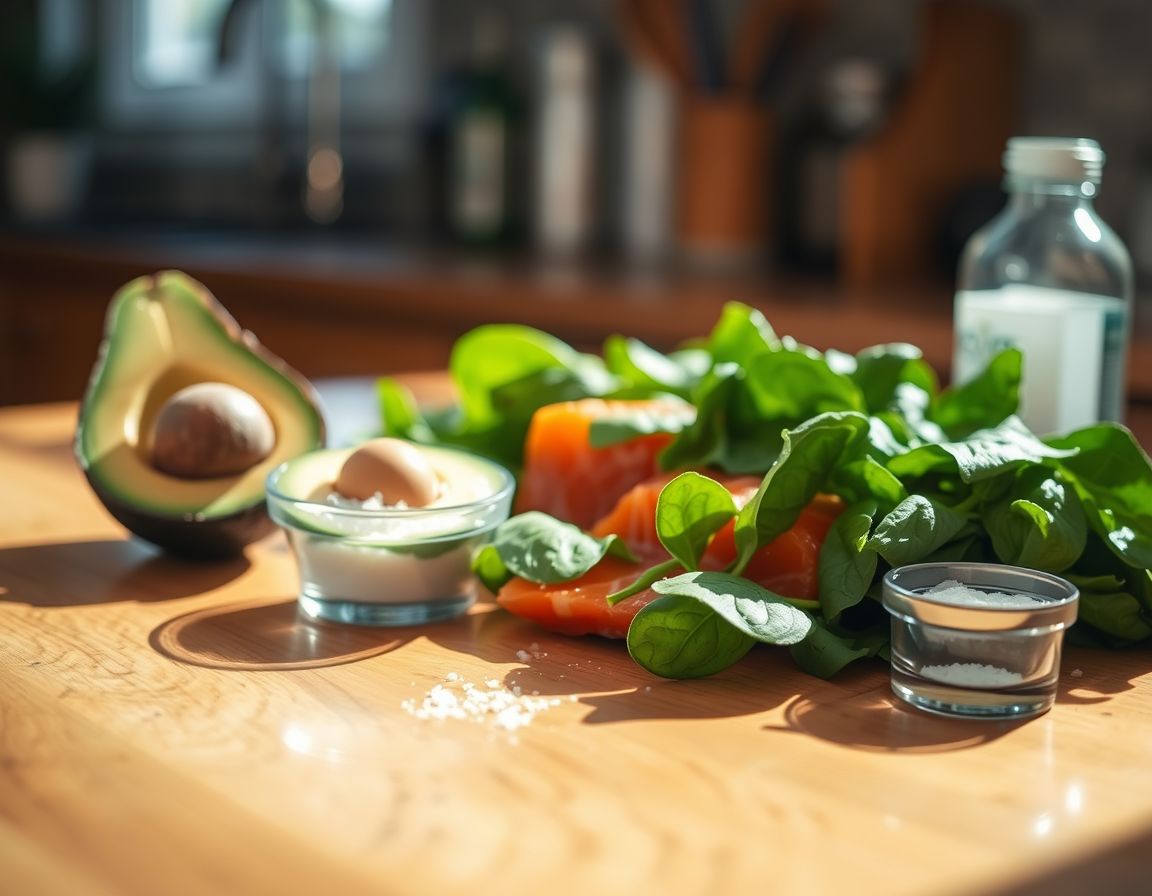
You've seen the electrolyte mixes that promise to fix keto flu. Then you flip the tub over and find potassium in it. Now you're wondering if you can skip it, or if you should. It's one of the most common questions I hear from women starting keto, and it deserves a plain answer.
Here's the short version. Potassium matters, food is the best place to get it, and if you take any medicine at all, your doctor or pharmacist needs to weigh in before you add it or avoid it.
Why potassium matters on keto
Potassium helps your muscles contract and relax. It also helps your nerves send signals and your heart keep a steady rhythm. You can't skip it and feel fine for long.
Keto changes how your body handles salt and water. Insulin drops, your kidneys let go of more sodium, and water goes with it. Potassium can shift along with it. Many people find that this is part of why the first couple of weeks feel rough, with headaches, tiredness, and leg cramps.
The general intake figures from the 2019 National Academies report are 2,600 mg a day for adult women and 3,400 mg for adult men. These are Adequate Intakes, not upper limits and not a bar you have to clear every day. Falling a little short on a given day is not a deficiency.
Why "electrolytes without potassium" is a fair thing to ask
Some people want potassium left out on purpose. Some find the mixes taste harsh or metallic. Others simply don't want to pay for a product when salt and a good meal might do the job.
Those are reasonable instincts. You don't have to buy a special electrolyte product. Many people find that salting their food and eating real food covers a lot of ground.
But there's a second group, and this part matters most. Some people ask for no potassium because a doctor told them to be careful with it. If that's you, keep reading.
Food first: where potassium comes from
Potassium is easy to find in foods you may already be eating on keto. You don't need a long list or a spreadsheet. A few steady habits go a long way.
- Meat and fish: beef, chicken, pork, and especially salmon and sardines. Our sister site Carnivore Weekly explains how far meat alone gets you on potassium.
- Avocado: a favorite for a reason. It's filling and potassium-rich.
- Leafy greens: spinach, Swiss chard, and kale cooked down in butter.
- Low-carb vegetables: mushrooms, zucchini, broccoli, and Brussels sprouts.
- Nuts and seeds: almonds and pumpkin seeds, in small handfuls.
- Dairy and eggs: if they agree with you, they add a little too.
Low-carb vegetables are fine and normal on keto. You're not choosing between potassium and your carb limit. A plate with salmon, a big spoonful of cooked spinach, and half an avocado does a lot of work.
If you're not sure how much you're eating overall, the KetoDial calculator can help you set up your daily targets first. Once your meals are steady, it's easier to see whether your plate is covering the basics.
Salt your food, and watch the water
Sodium is the electrolyte most people lose first on keto, so salting your food is a sensible step. If you want more on how sodium and magnesium fit in, our guide to keto electrolytes goes through them one by one.
Drinking huge amounts of plain water can make things worse, because it dilutes what you have. Drink to thirst, not to a number on a bottle.
Cramps at night? Our cramps troubleshooting guide walks through the usual causes in order, so you're not guessing.
Powders second, and sometimes not at all
Powders and capsules aren't evil. But potassium is different from sodium. With sodium, being a bit off is rarely dangerous for a healthy adult. With potassium, too much can be a real problem, and it's hard to judge by feel.
That's why I won't give you a dose here. There's no safe way to pick a number for someone I can't see bloodwork for. If a supplement is on your mind, that's a conversation for a clinician who knows your full picture.
If you take any medicine, stop and ask first
Some people find that a hidden potassium source in a "keto drink" causes trouble. Some medicines change how your body holds on to potassium or gets rid of it. Blood pressure pills, heart medicines, water pills, and kidney medicines are common examples. Even a salt substitute or "lite salt" can be a concentrated potassium source.
It cuts both ways. For some people, skipping potassium is the right call. For others, avoiding it could cause low levels, which also affects the heart and muscles. You can't tell which group you're in by guessing.
Here's what I'd do if you take any prescription, including ones that don't seem related:
- Tell your doctor or pharmacist you're starting keto, and ask them directly about potassium.
- Ask whether you need bloodwork, and how often.
- Ask about magnesium too, because it can interact with some medicines.
- Bring the label of any electrolyte mix or salt substitute you're thinking about.
- Don't change a medicine yourself because your weight or blood pressure is improving. That decision belongs to your prescriber.
Also, if you ever notice a racing or fluttering heartbeat, severe weakness, or chest pain, don't wait to see if it passes. Get medical care right away.
What I'd actually do
Salt your meals. Eat a potassium-rich food at most meals. Sleep, rest, and give yourself time, since keto flu usually eases in the first couple of weeks. If you're still struggling after that, our post on week 3 hunger explains why it may not be electrolytes at all.
And if a tub of powder has potassium in it, treat that line on the label as a question for your pharmacist, not a puzzle to solve alone. Your situation might be different, and that's exactly why a quick call can save you trouble.
I'm not a doctor. I've researched this deeply and worked with many people, but I'm not your doctor. If you have health conditions, take medications, or need specific guidance, talk to someone who knows your full medical picture. Everything I write is educational based on research and what I've seen work. Your situation might be different.