Keto Flu: What Actually Helped (According to 500 Reddit Comments)

We Read 500 Reddit Comments About Keto Flu So You Don't Have To
Okay, so you started keto and now you feel like you're coming down with the actual flu. Your head is pounding, you're exhausted by 2 PM, and you're seriously questioning every life choice that led you here. Sound about right?
Here's the thing. There are plenty of clinical guides out there explaining the science behind keto flu (our own Sarah wrote a great one on the electrolyte fix). But I wanted to know what real people actually experienced. Not the textbook version. The messy, honest, "I almost quit on day 3" version.
So I went deep into r/keto, r/ketobeginners, and a handful of Discord servers. I read through roughly 500 comments from people describing their keto flu experience. What helped, what made it worse, and how long the whole thing actually lasted. Here's what I found.
How Long Does Keto Flu Actually Last?
The most common answer across hundreds of comments? Three to five days. That's the window most people described as the worst of it. Some felt better by day 3. Others said it dragged on for a full week.
A smaller group, maybe 10-15% of the comments I read, reported symptoms lasting up to two weeks. These were almost always people who admitted they weren't supplementing electrolytes at all, or they were also restricting calories pretty aggressively at the same time.
The encouraging part? Almost everyone said they felt noticeably better on the other side. Like a fog lifted. Multiple people used the phrase "woke up feeling amazing" to describe the morning it finally broke.
The Symptoms Nobody Warned You About
Headaches, fatigue, brain fog. Those are the classic keto flu symptoms everyone talks about. But the community mentions a bunch of others that don't make it into most guides.
- Insomnia. This one came up constantly. People said they were exhausted all day but then couldn't fall asleep at night. Several mentioned waking up at 3 AM wide awake for no reason.
- Irritability. One commenter called it "keto rage" and honestly that term showed up more than once. Short temper, low patience, snapping at partners over nothing.
- Weird, vivid dreams. This surprised me. Dozens of people mentioned unusually intense or strange dreams during the first week. Nobody had a great explanation for it.
- Metallic taste. A persistent metallic or slightly sweet taste in the mouth. This one is actually related to ketone production, but it still catches people off guard.
- Leg cramps at night. Not just general achiness. Specific, painful calf cramps that wake you up. Commenters almost universally blamed magnesium, and this was the symptom that sent the most people out looking for a supplement. Read the note at the top of the next section before you do.
If you're experiencing any of these and wondering if something is wrong, you're not alone. They're way more common than most beginner guides suggest.
Community Fixes, Ranked by How Often People Mentioned Them
I tallied up every remedy that people said actually worked for them. Here's the ranking based on how frequently each one appeared in the comments. Worth being clear about what this list is: a tally of what strangers said helped them, not a protocol, and not something I'm handing you as a recommendation.
One thing to sort out before the potassium ones. Two of the five below add potassium, and potassium is the mineral that doesn't suit everyone. If you take something daily for blood pressure or your heart, a water pill, or anything to do with your kidneys, or if a blood test has ever come back with a note about your potassium or your kidney function, ask your doctor or your pharmacist before you add potassium from a packet, a supplement, or a salt substitute. Some of those medicines already hold potassium in your body, which means more on top is the problem rather than the help. Sarah's keto flu guide walks through that conversation properly.
1. Salted bone broth. This was the runaway winner. "Drink bone broth" appeared in almost every single thread about keto flu. People specifically mentioned sipping it throughout the day, not just having one cup. Several said adding extra salt to the broth made a noticeable difference within an hour.
2. Pickle juice. This one has become almost a meme in the keto community, but people swear by it. Straight from the jar. Some people do a shot of pickle juice first thing in the morning. Sounds weird, works apparently.
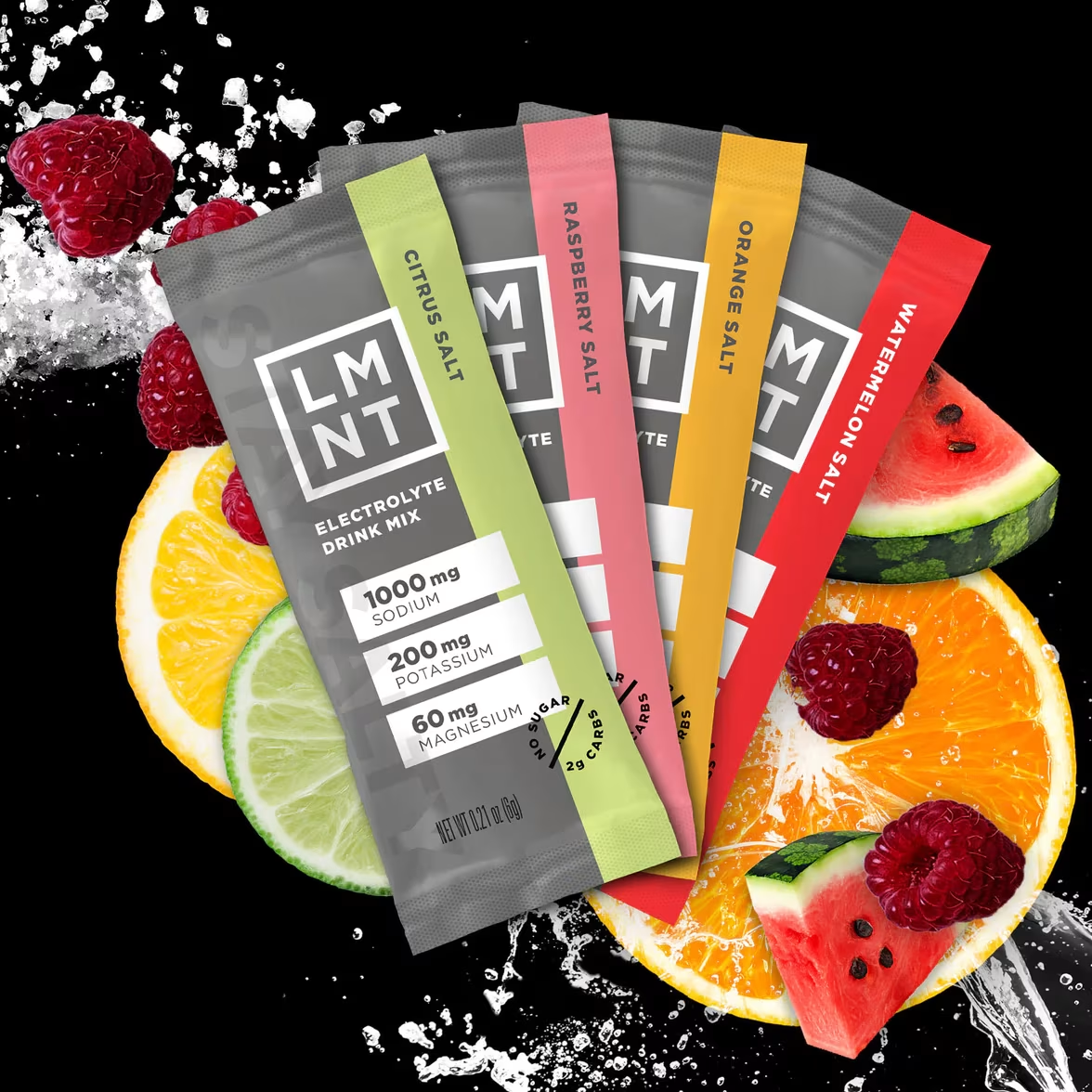
3. LMNT or similar electrolyte packets. The brand LMNT came up by name more than any other product. People liked that it has sodium, potassium, and magnesium without sugar. A few mentioned Keto Chow drops and Re-Lyte as alternatives.
4. A salt substitute in water. The budget version of the packets, and it came up almost as often. Morton Lite Salt is the one people named. It's half table salt and half potassium chloride, which makes it a potassium supplement wearing a kitchen label, and that's the part the comments never mentioned. I've left out the measurements people were passing around. A measured mineral drink is the one item on this list I can't hand to every reader the same way, because the readers it suits worst are the least likely to know that it doesn't suit them. If none of the caution above is you, the amount is still a two minute question at a pharmacy counter, and that's a better source for it than a comment thread or me.
5. Magnesium before bed. Specifically magnesium glycinate, not magnesium oxide (multiple people emphasized this distinction). Said it helped with the leg cramps, the insomnia, and general muscle tension. "Game changer for sleep" appeared in at least 20 comments. People quoted wildly different amounts, so I'm not going to pick one of them for you. The form is the part the comments actually agreed on. The amount depends on your kidney function and on whatever else you already take, which makes it a pharmacist question rather than a Reddit one.
If you want to sort your macros out before you worry about any of this, our free keto calculator is a good starting point. It doesn't hand you mineral numbers, and that's deliberate. What it gives you is a food target, and food is where most of this actually gets solved.
Things That Made Keto Flu Worse
This section might be more useful than the remedies. Because a lot of people made their keto flu significantly worse by doing things that seem logical on the surface.
Exercising hard in the first week. This came up over and over. People who tried to maintain their normal workout routine during the transition got hit harder and longer. The community consensus was clear: take it easy for the first 5-7 days. Walk, stretch, do yoga. Save the heavy lifting and intense cardio for after you've adapted.
Cutting calories and carbs at the same time. This was the biggest mistake people reported. Going keto AND trying to eat at a big caloric deficit simultaneously. Your body is already adjusting to a completely different fuel source. Starving it at the same time is asking for trouble. Eat until you're full during the first week. Worry about calories later.
Not eating enough fat. A surprising number of people admitted they went low-carb but also kept fat low out of habit. That leaves you basically running on protein alone, which isn't enough to fuel the transition. Several commenters said their keto flu disappeared almost immediately once they started adding more butter, avocado, and olive oil to their meals.
Drinking too much plain water without electrolytes. This one is counterintuitive. You'd think more water is always better. But several people pointed out that drinking tons of plain water actually flushes out electrolytes faster, making the problem worse. The fix wasn't less water. For most of them it was salting their food properly and having the water alongside real meals rather than in place of them.
The "Day 4 Wall"
There's a pattern in the comments that I started calling the Day 4 Wall. It goes like this: days 1-2 feel fine, maybe even exciting. Day 3 gets rough. And then day 4 hits like a truck.
Multiple people described day 4 as the absolute worst. The day they almost quit. The day they told their partner "this isn't worth it." One person said they sat in their car in a grocery store parking lot debating whether to go in and buy bread.
But here's what makes this useful to know: almost everyone who pushed through day 4 said day 5 or 6 was dramatically better. Knowing that the worst day is likely day 4 might be the most valuable thing I pulled from all 500 comments. It's not getting worse forever. You're probably at the peak of the hard part.
If you're staring down the Day 4 Wall right now, hang in there. Salt your food, eat enough of it, skip the gym today, and give yourself permission to feel crummy for 24 more hours. The carnivore community describes a similar adaptation period. The folks at Carnivore Weekly have some good perspectives on pushing through those early rough days.
The Science Behind All of This
I'm not going to pretend to be a biochemist here. That's not my thing. But if you want to understand WHY all of this happens on a cellular level, Sarah's post on the electrolyte fix for keto flu breaks down the actual mechanisms. Insulin drops, kidneys flush sodium, the whole cascade. It's worth reading if you're the kind of person who needs to understand the "why" before you trust the solution.
For the rest of us: your body is switching fuel sources. It's temporarily bad at it. Electrolytes help. Time helps more. You'll get through it.
And if you haven't already, check out our keto grocery list to make sure you're stocked with the right foods to get through this transition without making it harder on yourself.
Affiliate link — we may earn a small commission at no extra cost to you.
Not a Doctor. I write from research and from what works for real people, but I'm not your doctor and this isn't medical advice. If you take medication, have a diagnosed condition, are pregnant, or have a history of disordered eating, talk to your healthcare provider before changing how you eat. Your bloodwork and history matter more than any article.