Deli Meat Every Day: The Keto Lunch Trap
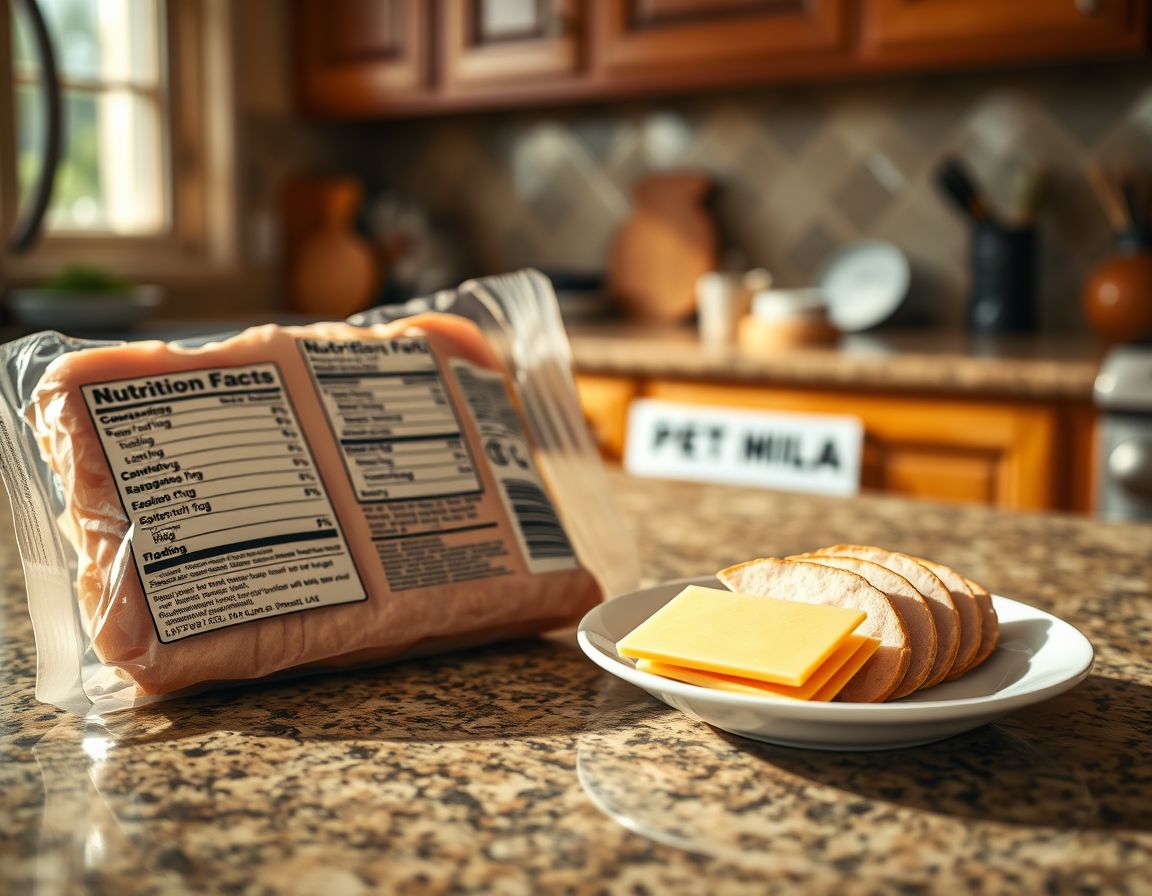
Let's do the math on your turkey lunch
Here's a lunch a lot of people pack: four or five thin slices of oven-roasted turkey, a slice of cheese, some mayo, lettuce, maybe a few olives on the side. It feels like a protein lunch. It's cold, it's fast, and it's the default keto lunch for a reason.
Now the label math. Most packaged deli turkey lists a serving as 2 oz, and thin slices run close to half an ounce each, so four or five slices is roughly one serving. Typical oven-roasted turkey in that category lands around 9 to 12 g of protein per 2 oz. Add an ounce of cheddar at about 7 g. Mayo and lettuce contribute nothing.
So that lunch is somewhere around 17 to 20 g of protein. Most people would have guessed 30. That's the whole problem, and it has nothing to do with deli meat being unhealthy.
Why the gap matters more after 45
Per-meal protein is the part that actually moves the needle. Roughly 30 to 40 g per meal does more for you than one giant dinner dose, and that's especially true past 50, when your body needs a bigger per-meal signal to hold onto muscle. Our carnivore site goes deeper on how much protein it takes after 50 to keep your muscle, and the per-meal math is the same whichever way you eat. A 19-gram lunch doesn't reach that threshold. It just doesn't.
The downstream effects are predictable. You're hungry at 3 p.m. You eat more at dinner than you planned. And over months, the scale moves but the mirror doesn't, because some of what you lost was lean tissue. That's the pattern behind what body composition scans actually show on keto, and it usually traces back to chronic under-eating of protein, not the diet itself.
If you're in week three and ravenous by afternoon, this is worth checking before you reach for more electrolytes. A lot of people assume hunger is a sodium or magnesium issue when it's simply not enough protein at the previous meal.
What about the sodium?
I want to be straight with you, because the internet gets this backwards. A 2 oz serving of deli turkey carries roughly 450 to 700 mg of sodium, and your whole lunch might hit 1,200 mg with the cheese and olives.
That is not a crisis. Most adults on keto do well at 3 to 5 g of sodium a day, and closer to 6 g if you're training hard or sweating in the heat. For reference, 1 teaspoon of salt is about 2.3 g of sodium. Your 1,200 mg lunch is roughly a quarter of a normal day. On keto you're losing more sodium in urine than you did on carbs, so the need genuinely goes up.
The real issue with deli meat isn't the salt. It's the trade you're making to get it. That sodium comes bundled with added water, starch or sugar in the brine, and a protein density that's noticeably lower than the same weight of actual roasted meat. Four ounces of real roasted turkey breast is about 30 g of protein. Four ounces of deli turkey is closer to 20, because part of what you're buying is brine.
Then there's the price. In a lot of stores, sliced deli meat runs $9 to $14 a pound while a whole turkey breast or a rotisserie chicken is a third of that. You're paying premium money for diluted protein. If sodium restriction is on your chart for blood pressure reasons, that's worth discussing with your doctor, but for most people this is a protein-per-dollar problem, not a salt problem.
Deli meat isn't the enemy
Convenience has real value, and a plan you can't execute on a Tuesday isn't a plan. Deli meat is genuinely fine as a component. Roll two slices around a pickle as a snack. Add it to a salad that already has eggs and chicken in it. Use it to bulk out a plate.
Where it breaks down is when it's the entire lunch, five days a week. Some people find that's also when boredom sets in, and boredom is what actually ends most keto attempts. That's the same trap behind why week six is where people quit.
Three batch lunches that take about the same five minutes
None of these require sous vide, a ham press, or a food processor. Each one is one cooking session on a Sunday and then five minutes of assembly on a weekday, the same five minutes the deli meat was taking.
1. Rotisserie chicken salad. About 33 g protein per serving. Buy a rotisserie chicken, pull the meat while it's still warm, which takes about 15 minutes. You'll get roughly 3 cups. Mix with mayo, a spoon of dijon, diced celery and onion. Curry powder or chopped walnuts if you want it to taste different on Thursday than it did on Monday. That's about three lunches at 33 g each, or four if you add a boiled egg to each container.
2. Sheet-pan seasoned ground beef. About 33 g protein per serving. Two pounds of 85/15 ground beef, browned with salt, garlic powder and cumin. Ten minutes of hands-on time. That's roughly 165 g of protein total, so split it into five containers at about 33 g each. Top with shredded cheese and sour cream, add avocado or a handful of shredded cabbage for crunch. Low-carb vegetables are fine and normal on keto, and they get you real potassium from food, which matters more than any powder.
3. Egg and sausage cups. About 36 g for three cups. Twelve eggs whisked with 6 oz shredded cheese and 6 oz cooked crumbled sausage or diced ham, poured into a greased muffin tin, 25 minutes at 375F. Ten minutes of hands-on time and you get twelve cups at roughly 12 g each. Three cups is your lunch. They keep about five days in the fridge.
Backup plan for the day you didn't prep: a can of tuna or salmon plus a boiled egg gets you to about 30 g with no cooking at all. If you're leaning on packaged options instead, it's worth knowing which protein snacks actually earn their shelf space, because most of that aisle has the same dilution problem deli meat does.
Your actual number
Aim for 0.8 to 1.0 g of protein per pound of your goal body weight, not your current weight. If your goal is 150 lb, that's 120 to 150 g a day. Divided across three or four meals, you land at 30 to 40 g per meal, which is exactly where you want to be. The KetoDial calculator will run your goal-weight number for you if you'd rather not do the arithmetic.
Then check one lunch against it. Not your whole week, just one. Most people are off by 15 g and have no idea, and closing that gap is the single easiest fix on this list.
I'm not a doctor. I've researched this deeply and worked with a lot of people, but I'm not your doctor. If you have health conditions, take medications, or have been told to limit sodium, talk to someone who knows your full medical picture before changing anything. Everything here is educational, based on research and what I've seen work. Your situation might be different.